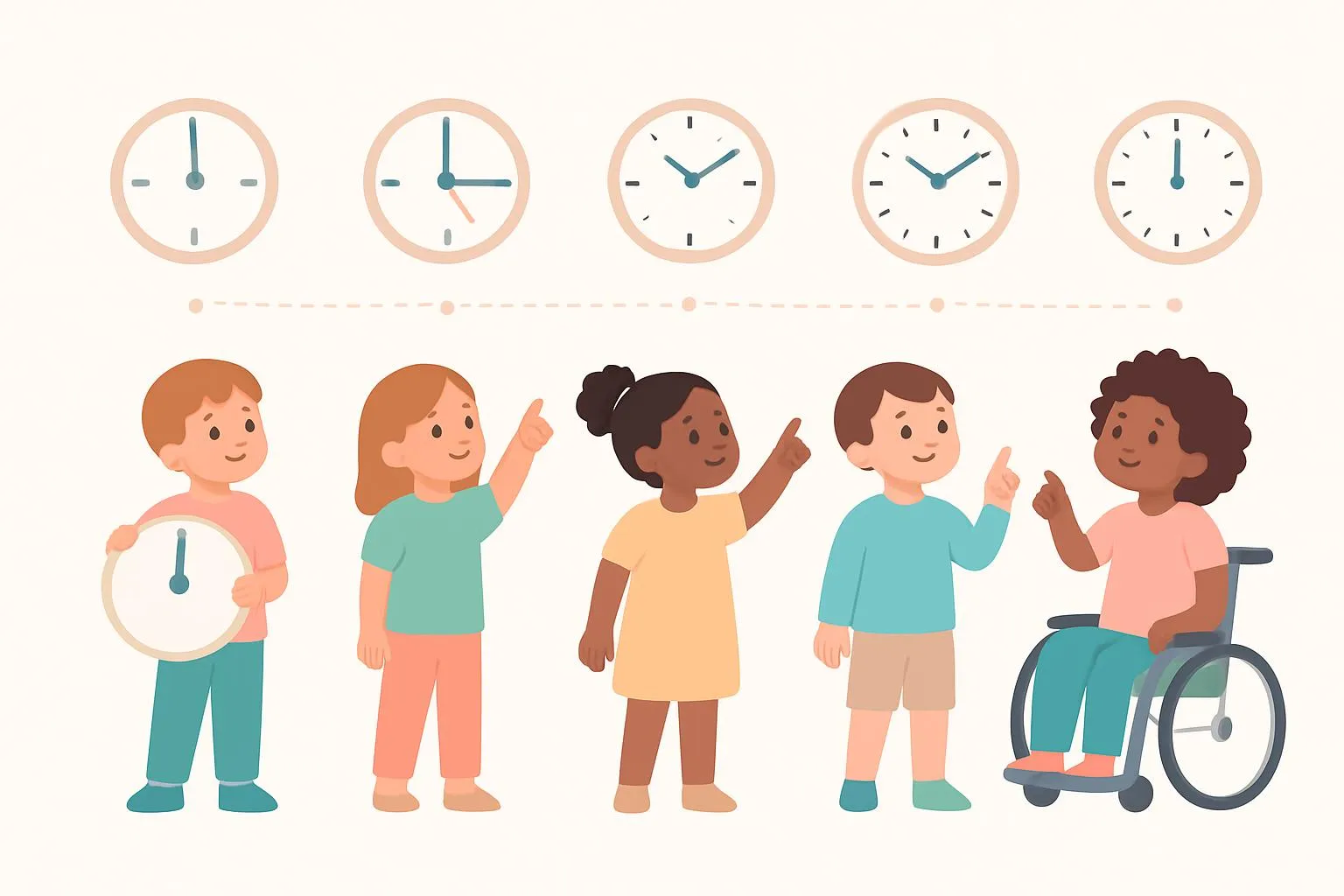
The Right Time to Teach Time: Understanding Developmental Readiness
One of the most common questions parents and educators ask is: "When should I start teaching my child to tell time?" The answer isn't a simple age—it depends on developmental readiness, prerequisite skills, and individual differences. This comprehensive guide will help you determine the optimal time to introduce time-telling skills to children.
Developmental Milestones and Time Concepts
Ages 3-4: Early Time Awareness
What Children Understand:
- Basic time concepts: "now," "later," "soon"
- Sequence of daily events: "First we eat, then we play"
- Simple time language: "morning," "afternoon," "night"
- Recognition that time passes
What to Teach:
- Time vocabulary in context: "It's morning time!"
- Daily routine sequences
- Before and after concepts
- Simple waiting and time passage
Not Ready For: Reading clocks, understanding hours and minutes, numerical time concepts
Ages 5-6: Kindergarten Readiness
What Children Understand:
- Days of the week
- Yesterday, today, tomorrow
- Seasons and months (beginning understanding)
- Longer time periods: "after lunch," "before bedtime"
What to Teach:
- Introduction to clock face and hands
- Whole hours only (1:00, 2:00, 3:00)
- Connecting times to daily activities
- Calendar concepts
Prerequisite Skills Needed:
- Can count to 12
- Recognizes numbers 1-12
- Understands "big" and "small"
- Can follow simple sequences
Ages 6-7: First Grade - Prime Time for Time-Telling
Why This Age Is Ideal:
- Cognitive Development: Can handle multi-step processes
- Number Skills: Comfortable with numbers and counting
- Pattern Recognition: Can see and use patterns
- Attention Span: Can focus on learning tasks longer
- Motivation: Wants to be "grown up" and independent
What to Teach:
- Whole hours (mastery level)
- Half hours (30 minutes)
- Quarter hours (15 and 45 minutes)
- Introduction to 5-minute intervals
- Digital clock reading basics
Expected Outcomes:
By end of first grade, most children can read whole hours and half hours confidently, with many progressing to quarter hours.
Ages 7-8: Second Grade - Refinement and Mastery
What Children Can Master:
- All 5-minute intervals
- Reading time to the exact minute
- Converting between analog and digital
- Understanding AM and PM
- Simple elapsed time calculations
What to Teach:
- Complete mastery of 5-minute increments
- Precision reading (individual minutes)
- Time word problems
- Real-world time applications
- Time zones (introduction)
Ages 8+: Third Grade and Beyond
Advanced Concepts:
- Elapsed time with crossing hours
- Time zones and international time
- 24-hour clock format
- Converting between time units
- Scheduling and time management
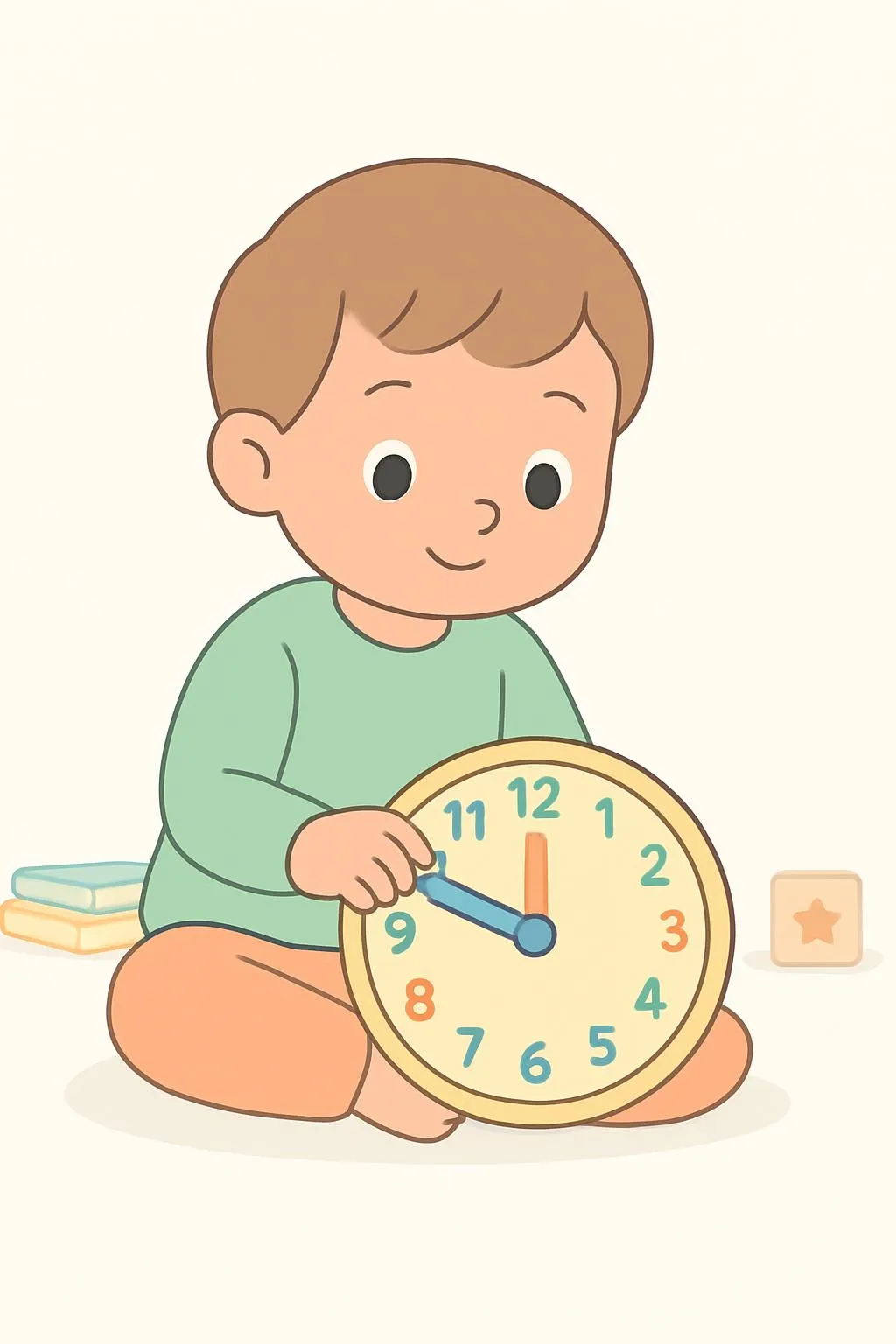
Prerequisite Skills Assessment
Before beginning formal time-telling instruction, ensure your child has these foundational skills:
Essential Prerequisites:
1. Number Recognition (1-12)
- Can identify numbers 1-12 instantly
- Knows the sequence of numbers
- Understands that numbers represent quantities
Test: Show random numbers 1-12 and ask child to identify them.
2. Counting Skills
- Can count to 60
- Can count by ones reliably
- Beginning to count by fives (5, 10, 15, 20...)
Test: Ask child to count from 1 to 60, then by fives to 60.
3. Sequencing Understanding
- Understands "before" and "after"
- Can order events in sequence
- Recognizes patterns
Test: Ask "What comes after 5?" or "What number is before 8?"
4. Basic Addition
- Can add simple numbers (especially by fives)
- Understands combining quantities
- Beginning mental math skills
Test: Ask "What is 5 + 5?" or "If we have 10 and add 5 more, how many?"
Readiness Checklist
Your child is ready to learn time-telling when they can:
- ☐ Identify numbers 1-12 quickly and accurately
- ☐ Count to 60 without errors
- ☐ Count by fives to at least 30
- ☐ Understand "before" and "after" concepts
- ☐ Recognize a clock and its basic parts
- ☐ Show interest in learning about time
- ☐ Can focus on a learning task for 10-15 minutes
- ☐ Follow multi-step directions
Scoring:
- 7-8 checks: Ready to begin! Start with whole hours
- 5-6 checks: Almost ready. Work on missing prerequisites first
- 0-4 checks: Not quite ready. Focus on foundational skills

Individual Differences Matter
Early Learners (Advanced for Age)
Some children show readiness earlier than typical. Signs include:
- Strong number sense and counting skills
- Intense interest in clocks and time
- Advanced pattern recognition
- Asks questions about time frequently
Approach: Follow the child's interest but don't push. Use age-appropriate methods even if teaching advanced concepts.
Late Bloomers (Developing at Own Pace)
Some children need more time to develop readiness. This is completely normal. Signs include:
- Still working on number recognition
- Difficulty with counting sequences
- Limited interest in time concepts
- Struggles with multi-step processes
Approach: Wait until prerequisite skills are solid. Focus on building foundations without pressure. Time-telling will come when ready.
Children with Learning Differences
Children with learning differences may need:
- More time to develop readiness
- Modified instruction methods
- Additional visual or tactile supports
- Smaller, more gradual steps
- Extended practice periods
Approach: Individualize instruction based on specific needs. Consult with special education professionals for strategies.
Cultural and Educational Context
International Perspectives:
United States: Typically begins in first grade (age 6-7), with mastery expected by end of second grade
United Kingdom: Introduced in Year 1 (age 5-6), with progression through Year 3
Finland: Often delayed until age 7-8, with emphasis on readiness over age
Singapore: Systematic instruction begins in Primary 1 (age 6-7) with strong emphasis on mastery
Curriculum Standards:
Most educational standards expect:
- Kindergarten: Awareness of time concepts, introduction to clock
- Grade 1: Tell time to hour and half hour
- Grade 2: Tell time to 5-minute intervals
- Grade 3: Tell time to the minute, elapsed time
Signs Your Child Is Ready to Progress
Ready for Half Hours When:
- Reads whole hours with 90%+ accuracy
- Understands the minute hand's purpose
- Can count by fives to 30
- Shows confidence with current skills
Ready for Quarter Hours When:
- Masters whole and half hours
- Counts by fives to 60 reliably
- Understands fractions concepts (half, quarter)
- Can identify where minute hand points
Ready for 5-Minute Intervals When:
- Confidently reads quarter hours
- Skip counts by fives automatically
- Understands hour hand position between numbers
- Shows readiness for more complexity
What If My Child Isn't Ready?
If your child isn't showing readiness, focus on building prerequisites:
Number Skills Development:
- Practice number recognition with games
- Count objects in daily life
- Play number sequencing games
- Use number lines and charts
Time Awareness Activities:
- Talk about time in daily routines
- Use time vocabulary naturally
- Create visual schedules
- Point out clocks in environment
Skip Counting Practice:
- Count by fives with songs
- Use manipulatives grouped by fives
- Practice daily until automatic
- Make it fun with movement and music
Parental Pressure and Expectations
Avoid These Pitfalls:
- Comparing to Peers: Every child develops at their own pace
- Forcing Readiness: Pushing before ready creates frustration
- Excessive Drilling: Makes learning unpleasant and stressful
- Negative Reactions: Criticism damages confidence and motivation
Healthy Approach:
- Follow your child's developmental timeline
- Make learning fun and pressure-free
- Celebrate small successes
- Be patient—mastery takes time
- Seek help if genuinely concerned
Supporting Learning at Different Ages
For Preschoolers (3-5):
- Build time vocabulary through daily routines
- Read books about time and clocks
- Play with toy clocks (no formal instruction)
- Establish predictable daily schedules
For Early Elementary (5-7):
- Begin formal instruction when ready
- Use our worksheet generator for practice
- Connect time to real-world activities
- Practice daily in short sessions
For Older Elementary (8+):
- Focus on mastery and application
- Introduce advanced concepts
- Use time in problem-solving
- Develop time management skills
When to Seek Professional Guidance
Consult with educators or specialists if:
- Child is significantly behind peers (2+ years)
- Shows extreme frustration or anxiety about time
- Has difficulty with basic prerequisites by age 7
- Demonstrates other learning challenges
- Makes no progress despite appropriate instruction
Conclusion: Timing Is Everything
The best time to teach time-telling is when your child shows developmental readiness, not when they reach a specific age. By assessing prerequisite skills, following your child's individual timeline, and providing appropriate support, you'll set the stage for successful time-telling mastery.
Key Takeaways:
- Most children are ready to begin learning time in first grade (ages 6-7)
- Prerequisite skills are more important than age
- Individual differences are normal and expected
- Readiness assessment prevents frustration
- Patient, developmentally appropriate instruction works best
Your Action Plan:
- Assess your child's current developmental level
- Check for prerequisite skills using our checklist
- Build missing foundations before formal instruction
- Begin time-telling when readiness indicators are present
- Progress at your child's individual pace
- Use appropriate resources like our free generator
Recommended Reading
- Clock Worksheets for Kindergarten
- 1st Grade Clock Worksheets
- Teaching Time to First Graders
- 📖 Complete Teaching Guide: How to Teach Children to Tell Time
Ready to begin teaching time? Assess your child's readiness today and start with appropriately leveled worksheets from our free generator!