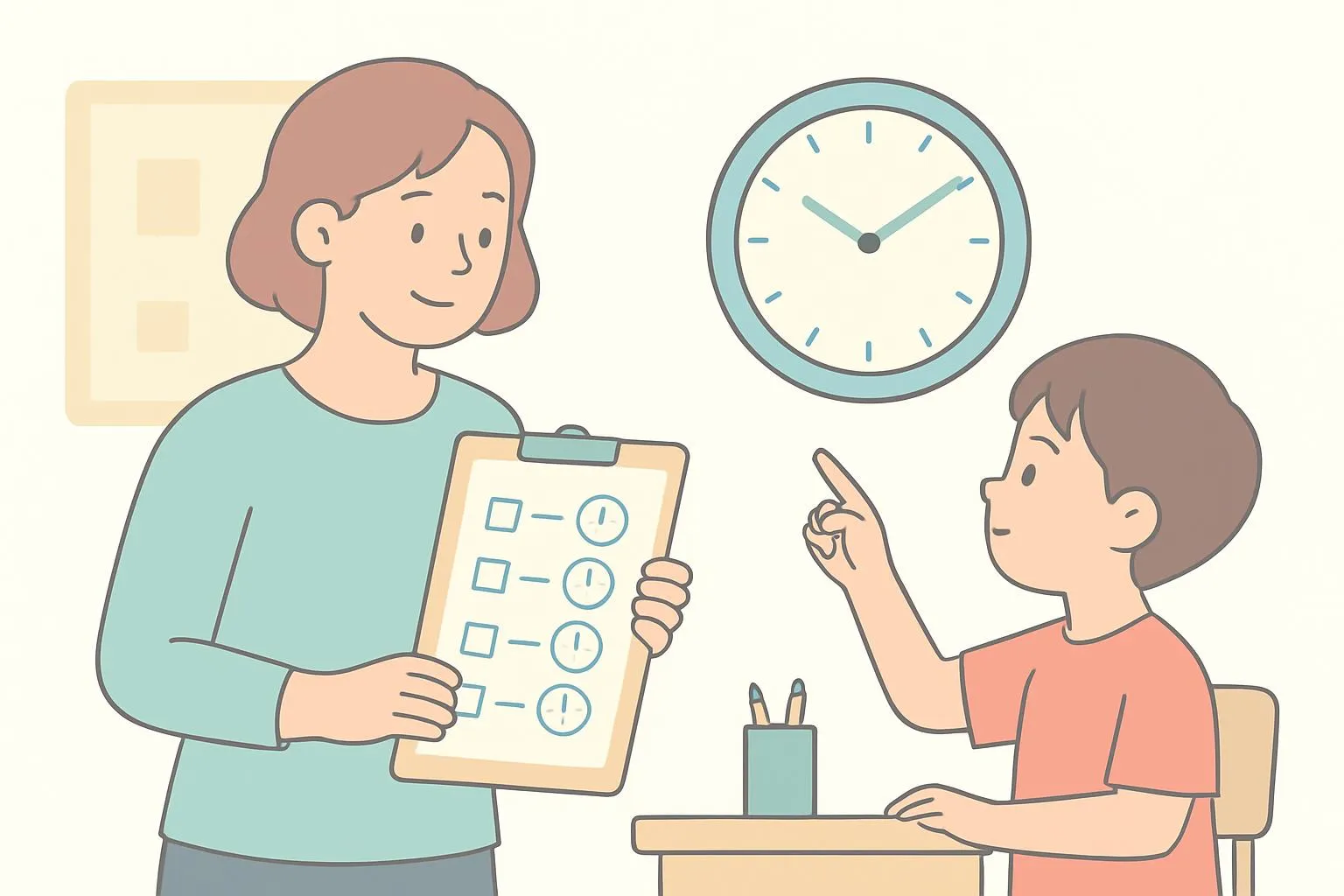
Effective Assessment of Time-Telling Skills
Assessment is essential for tracking student progress, identifying areas needing support, and determining when students are ready to advance. This comprehensive guide provides practical assessment strategies, tools, and methods for evaluating time-telling skills at every level.
Types of Assessment
Formative Assessment (Ongoing)
Purpose: Monitor daily progress and guide instruction
Frequency: Daily or multiple times per week
Methods:
- Quick verbal checks during lessons
- Observation during practice activities
- Exit tickets at end of lesson
- Partner checks and peer assessment
- Digital app progress tracking
Summative Assessment (Periodic)
Purpose: Evaluate mastery of concepts
Frequency: End of unit, quarter, or semester
Methods:
- Comprehensive written tests
- Performance tasks
- Portfolio reviews
- Standardized assessments
Diagnostic Assessment (As Needed)
Purpose: Identify specific difficulties and misconceptions
When to Use: When student shows persistent struggles
Methods:
- One-on-one interviews
- Error analysis
- Prerequisite skills check
- Think-aloud protocols
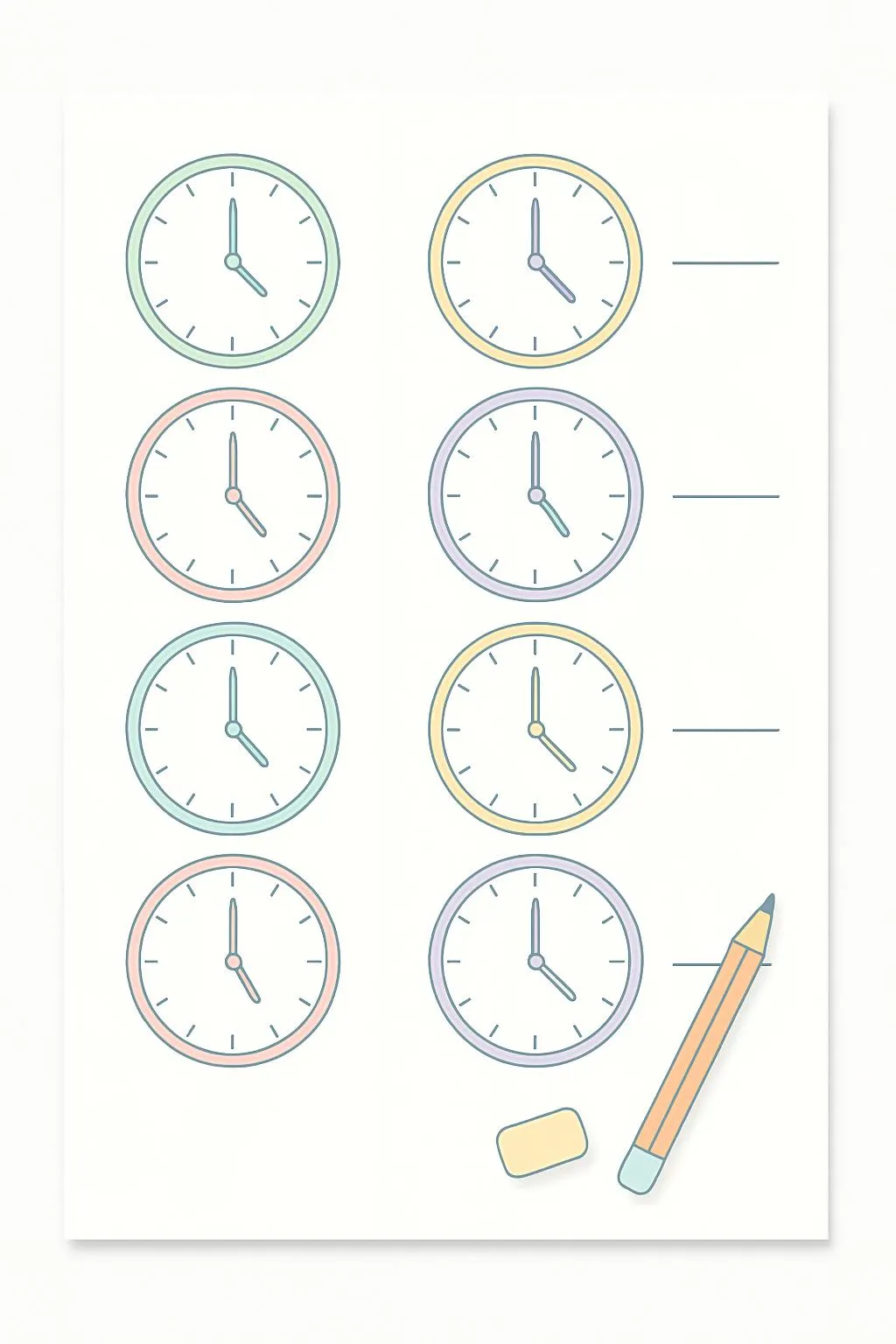
Assessment Methods by Skill Level
Level 1: Whole Hours Assessment
Skills to Assess:
- Recognizes clock parts (face, hands, numbers)
- Identifies hour hand vs. minute hand
- Reads times on the hour (1:00, 2:00, etc.)
- Sets clock to show whole hours
Assessment Tasks:
Task 1: Reading Times
- Show 10 clocks displaying whole hours
- Student reads each time aloud or writes it
- Mastery: 9/10 correct (90%)
Task 2: Setting Times
- Call out 5 whole hour times
- Student sets clock to show each time
- Check both hand positions
- Mastery: 4/5 correct (80%)
Task 3: Matching
- Match 8 analog clocks to digital times
- All showing whole hours
- Mastery: 7/8 correct (87%)
Level 2: Half Hours and Quarter Hours Assessment
Skills to Assess:
- Reads :30 times accurately
- Reads :15 and :45 times
- Understands hour hand position at these times
- Distinguishes between similar times
Assessment Tasks:
Task 1: Mixed Reading
- 15 clocks showing :00, :15, :30, :45 times
- Mixed randomly
- Student reads each time
- Mastery: 13/15 correct (87%)
Task 2: Drawing Hands
- Provide 8 blank clock faces
- Call out times at quarter-hour intervals
- Student draws both hands correctly
- Check hand length and position
- Mastery: 7/8 correct
Task 3: Discrimination
- Show pairs of similar times (3:15 vs 3:45)
- Student identifies which is which
- Tests understanding of differences
Level 3: 5-Minute Intervals Assessment
Skills to Assess:
- Reads any time in 5-minute intervals
- Counts by fives accurately
- Identifies hour correctly when hand is between numbers
- Sets clock to any 5-minute interval time
Assessment Tasks:
Task 1: Comprehensive Reading
- 20 clocks showing various 5-minute interval times
- Include challenging times (:45, :50, :55)
- Student reads each time
- Mastery: 18/20 correct (90%)
Task 2: Setting Challenge
- Call out 10 times at 5-minute intervals
- Student sets clock for each
- Timed: 30 seconds per time
- Mastery: 9/10 correct
Task 3: Word Problems
- 5 simple word problems involving time
- "School starts at 8:15. Show this time on the clock."
- Tests application of skills
Level 4: Precision and Advanced Concepts
Skills to Assess:
- Reads time to the exact minute
- Understands AM/PM
- Calculates elapsed time
- Converts between analog and digital
Assessment Tasks:
Task 1: Minute Precision
- 15 clocks showing times to the minute
- Include times between 5-minute marks
- Student reads each precisely
- Mastery: 13/15 correct
Task 2: AM/PM Determination
- 10 scenarios describing activities
- Student determines if time is AM or PM
- "You eat breakfast at 7:00 ___"
- Mastery: 9/10 correct
Task 3: Elapsed Time
- 8 problems calculating time differences
- Start with whole hours, progress to minutes
- "Movie starts at 2:00, ends at 4:30. How long?"
- Mastery: 6/8 correct (75%)
Assessment Tools and Formats
1. Worksheet Assessments
Advantages:
- Easy to administer to whole class
- Provides written record
- Can be graded quickly
- Standardized format
How to Create:
- Use our worksheet generator
- Select appropriate difficulty level
- Include 15-20 problems
- Mix question types
Scoring:
- 1 point per correct answer
- Calculate percentage
- 90%+ = Mastery
- 80-89% = Approaching mastery
- Below 80% = Needs more practice
2. Performance Assessments
What They Are: Hands-on tasks demonstrating skills
Examples:
Clock Setting Task:
- Provide student clock
- Call out 10 different times
- Student sets clock for each
- Observe and record accuracy
Real-World Application:
- Give student a daily schedule
- Ask questions: "What time is lunch?" "How long is recess?"
- Tests practical application
Teaching Task:
- Student explains how to read a specific time
- Assesses depth of understanding
- Reveals misconceptions
3. Oral Assessments
One-on-One Interview:
- Show clocks individually
- Student reads times aloud
- Ask follow-up questions
- Note fluency and confidence
Think-Aloud Protocol:
- Student verbalizes thinking process
- "Tell me how you figured that out"
- Reveals strategies and misconceptions
- Valuable diagnostic information
4. Digital Assessments
Apps with Built-In Assessment:
- Automatic scoring
- Immediate feedback
- Progress tracking over time
- Data reports for teachers
Online Quizzes:
- Google Forms with clock images
- Interactive whiteboard assessments
- Kahoot or similar game-based assessment
5. Portfolio Assessment
What to Include:
- Sample worksheets from each level
- Photos of student with clocks
- Self-assessment reflections
- Progress tracking charts
- Teacher observation notes
Benefits:
- Shows growth over time
- Multiple evidence sources
- Student ownership of learning
- Comprehensive picture of skills
Quick Assessment Strategies
Exit Tickets (2-3 minutes)
Format:
- Small paper or index card
- 2-3 clock faces to read
- Student completes before leaving
- Quick check of daily learning
Thumbs Up/Down Check
How It Works:
- Show a time on demonstration clock
- Say a time aloud
- Students thumbs up if correct, down if incorrect
- Quick whole-class confidence check
Whiteboard Response
Materials: Individual whiteboards or paper in sheet protectors
Process:
- Show clock or call out time
- Students write answer on whiteboard
- Hold up simultaneously
- Teacher scans for accuracy
Clock Race
Assessment + Game:
- Call out time
- Students race to set their clocks
- Note who completes correctly and quickly
- Fun way to assess fluency
Rubrics and Scoring Guides
Time-Reading Rubric
4 - Advanced:
- Reads all times accurately and quickly
- Explains thinking clearly
- Applies skills to real-world situations
- Helps peers understand
3 - Proficient:
- Reads times at grade level accurately
- Occasional minor errors
- Works independently
- Meets grade-level standards
2 - Developing:
- Reads some times correctly
- Frequent errors
- Needs support and practice
- Approaching grade-level standards
1 - Beginning:
- Limited time-reading ability
- Significant misconceptions
- Requires direct instruction
- Below grade-level standards
Clock-Setting Rubric
Criteria:
- Hour hand position (correct/incorrect)
- Minute hand position (correct/incorrect)
- Hand lengths appropriate (yes/no)
- Speed/fluency (fast/moderate/slow)
Error Analysis
Common Error Patterns
Error Type 1: Hand Confusion
- Example: Reading 3:15 as "15:03"
- Intervention: Review hand identification, use color coding
Error Type 2: Hour Hand Misreading
- Example: Reading 3:45 as "4:45"
- Intervention: Teach "between rule," practice :45 times specifically
Error Type 3: Skip Counting Errors
- Example: Counting incorrectly by fives
- Intervention: Practice skip counting separately from clock reading
Error Type 4: Past/To Confusion
- Example: Saying "quarter to 3" for 3:15
- Intervention: Use visual division, simplify to digital format
Tracking Error Patterns
Error Analysis Chart:
- List student names
- Columns for each error type
- Tally errors by type
- Identify patterns for intervention
Progress Monitoring
Weekly Progress Checks
Consistent Format:
- Same day each week (e.g., Friday)
- Same number of problems (e.g., 10)
- Same difficulty level
- Track scores over time
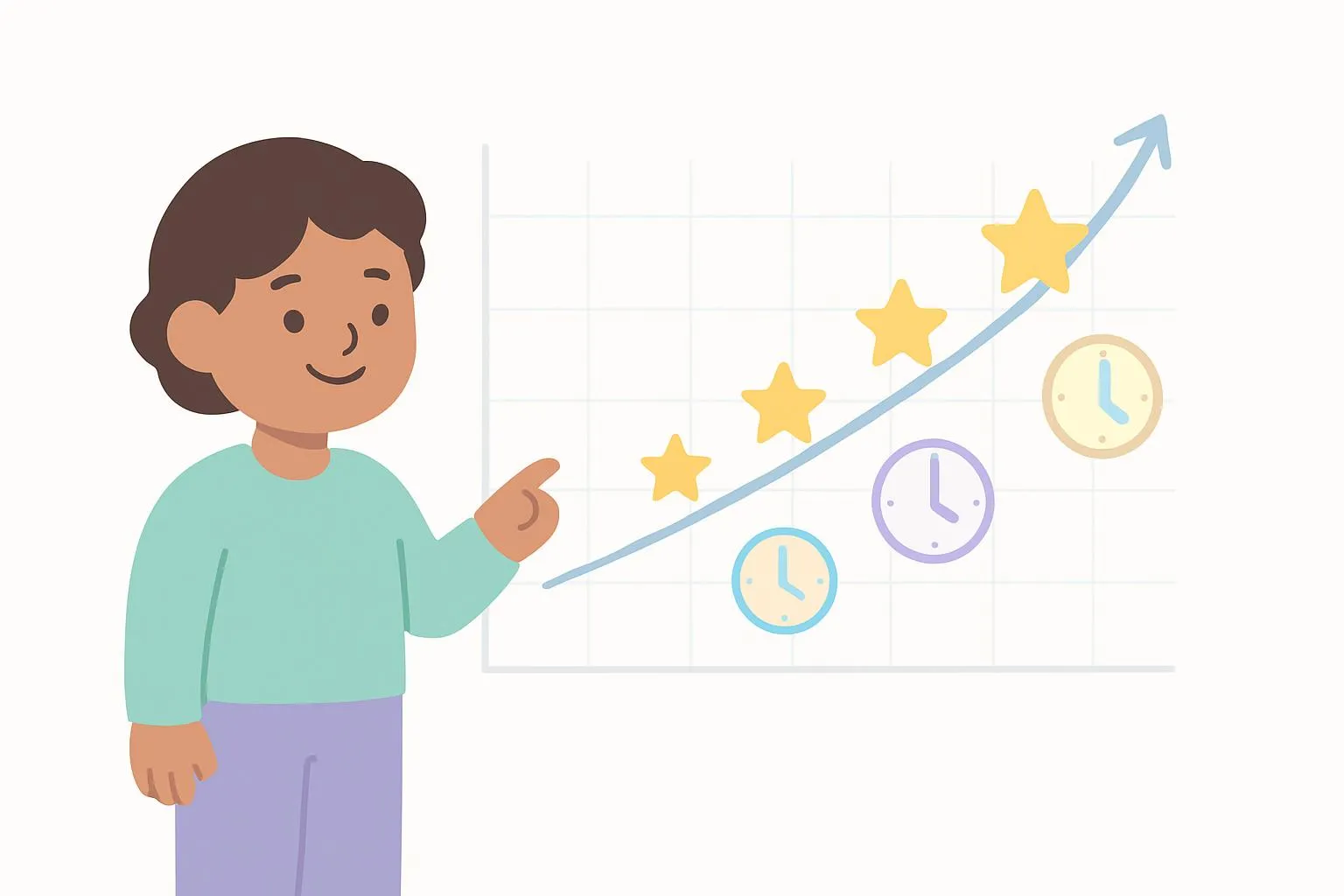
Graphing Progress:
- Create line graph of weekly scores
- Visual representation of improvement
- Motivating for students
- Clear data for parents and administrators
Skill Mastery Checklist
Track Individual Skills:
- ☐ Identifies clock parts
- ☐ Reads whole hours
- ☐ Reads half hours
- ☐ Reads quarter hours
- ☐ Reads 5-minute intervals
- ☐ Reads to the minute
- ☐ Understands AM/PM
- ☐ Calculates elapsed time
Date each skill when mastered
Differentiated Assessment
For Struggling Learners
- Fewer problems (5-8 instead of 15-20)
- Extended time
- Use of labeled reference clocks
- Oral instead of written responses
- Focus on current level only
For Advanced Learners
- More complex problems
- Word problems and applications
- Timed assessments for fluency
- Multi-step problems
- Extension concepts (time zones, 24-hour clock)
For English Language Learners
- Visual assessments (less text)
- Bilingual support when possible
- Demonstrate understanding non-verbally
- Extended time for language processing
Communicating Assessment Results
To Students
Feedback Should Be:
- Specific: "You read :30 times perfectly!"
- Timely: Provide feedback immediately or within 24 hours
- Actionable: "Let's practice :45 times more"
- Encouraging: Focus on growth and effort
To Parents
Progress Report Format:
- Current skill level
- Recent assessment scores
- Strengths and areas for growth
- Suggestions for home practice
- Timeline for next assessment
Sample Communication:
"Sarah has mastered whole hours and half hours (90% accuracy). She's currently working on quarter hours. She sometimes confuses :15 and :45. At home, you can help by practicing these times using our free worksheets. Next assessment: March 15."
Using Assessment Data
To Guide Instruction
- Identify which concepts need reteaching
- Group students by skill level
- Plan targeted interventions
- Adjust pacing based on class progress
To Inform Differentiation
- Create flexible skill groups
- Provide appropriate practice materials
- Offer extensions or support as needed
- Match activities to readiness levels
To Track Growth
- Compare beginning and end-of-unit scores
- Document progress for records
- Celebrate improvement with students
- Identify students needing additional support
Conclusion: Assessment for Learning
Effective assessment is not just about grading—it's about understanding where students are, where they need to go, and how to help them get there. By using varied assessment methods and acting on the data collected, you can ensure all students master time-telling skills.
Key Takeaways:
- Use multiple assessment methods for complete picture
- Assess frequently but briefly
- Focus on mastery, not just completion
- Use data to guide instruction
- Provide specific, actionable feedback
- Track progress over time
Your Assessment Action Plan:
- Choose 2-3 assessment methods to implement
- Create assessment schedule (weekly, end-of-unit)
- Use our generator to create assessment worksheets
- Establish mastery criteria for each level
- Track student progress systematically
- Use data to adjust instruction
- Communicate results to students and parents
Recommended Reading
- Clock Worksheets with Answer Keys
- 5 Common Mistakes Kids Make Learning Time
- Clock Worksheets for Teachers
- 📖 Complete Teaching Guide: How to Teach Children to Tell Time
Ready to assess your students' time-telling skills? Create customized assessment worksheets with our free generator and start tracking progress today!