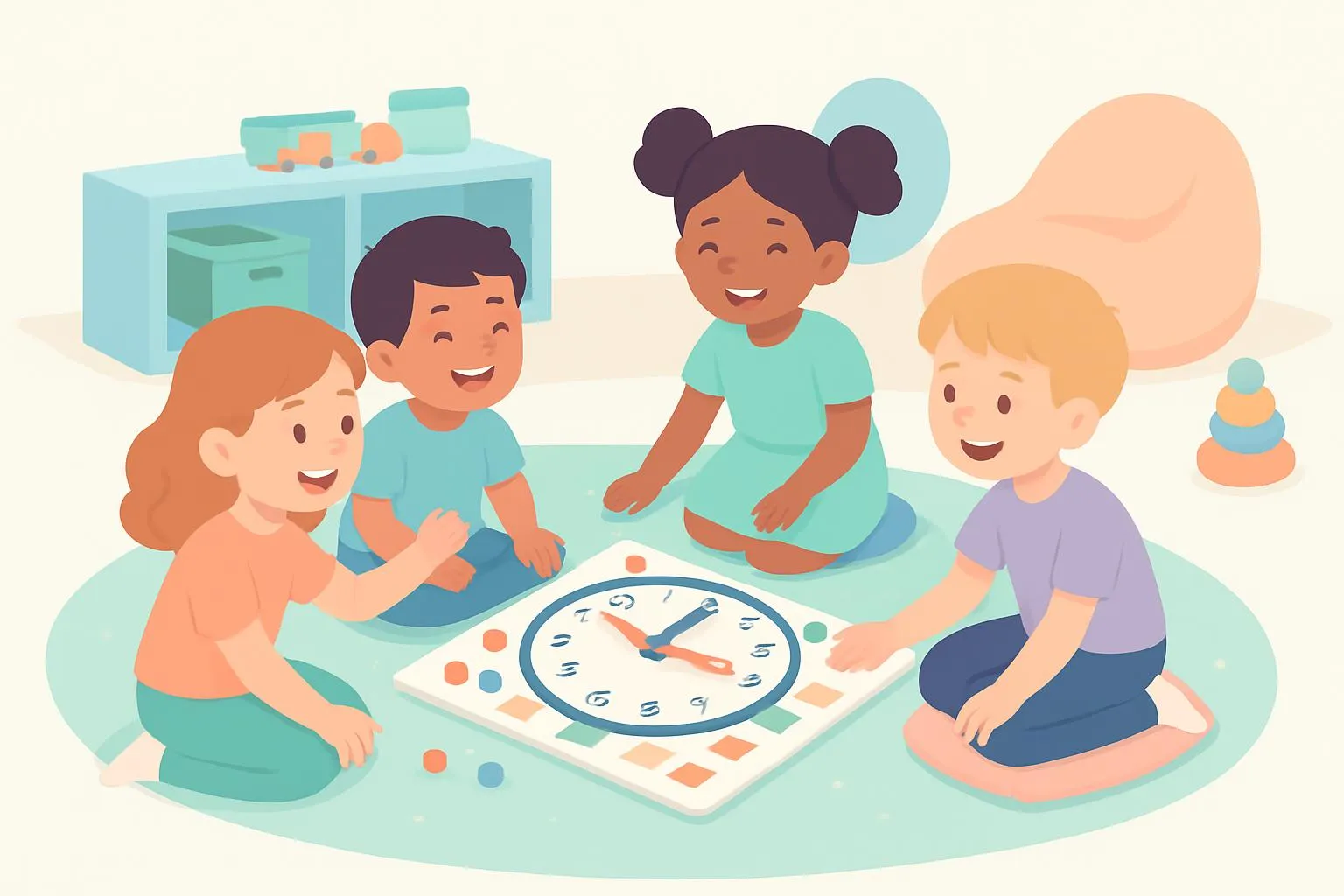
Making Time-Telling Fun: The Power of Games
Learning to tell time doesn't have to be a tedious task filled with worksheets and drills. Games transform time-telling practice into engaging, memorable experiences that children actually look forward to. Research shows that game-based learning increases retention by up to 75% compared to traditional methods.
In this guide, we'll explore 10 exciting clock games that make learning time easy, fun, and effective for children in grades 1-4.
Game 1: Clock Race
What You Need:
- Individual student clocks with movable hands
- Time cards with various times written on them
- Timer
How to Play:
Call out a time (e.g., "3:30") and have students race to set their clocks correctly. The first student to set the correct time wins a point. This game builds speed and accuracy in time recognition.
Variations:
- Team Race: Divide class into teams and keep team scores
- Reverse Race: Show a clock face and have students write the time
- Challenge Mode: Use more difficult times like 7:47 for advanced students
Educational Benefits:
Develops quick recognition skills, hand-eye coordination, and competitive motivation for practice.
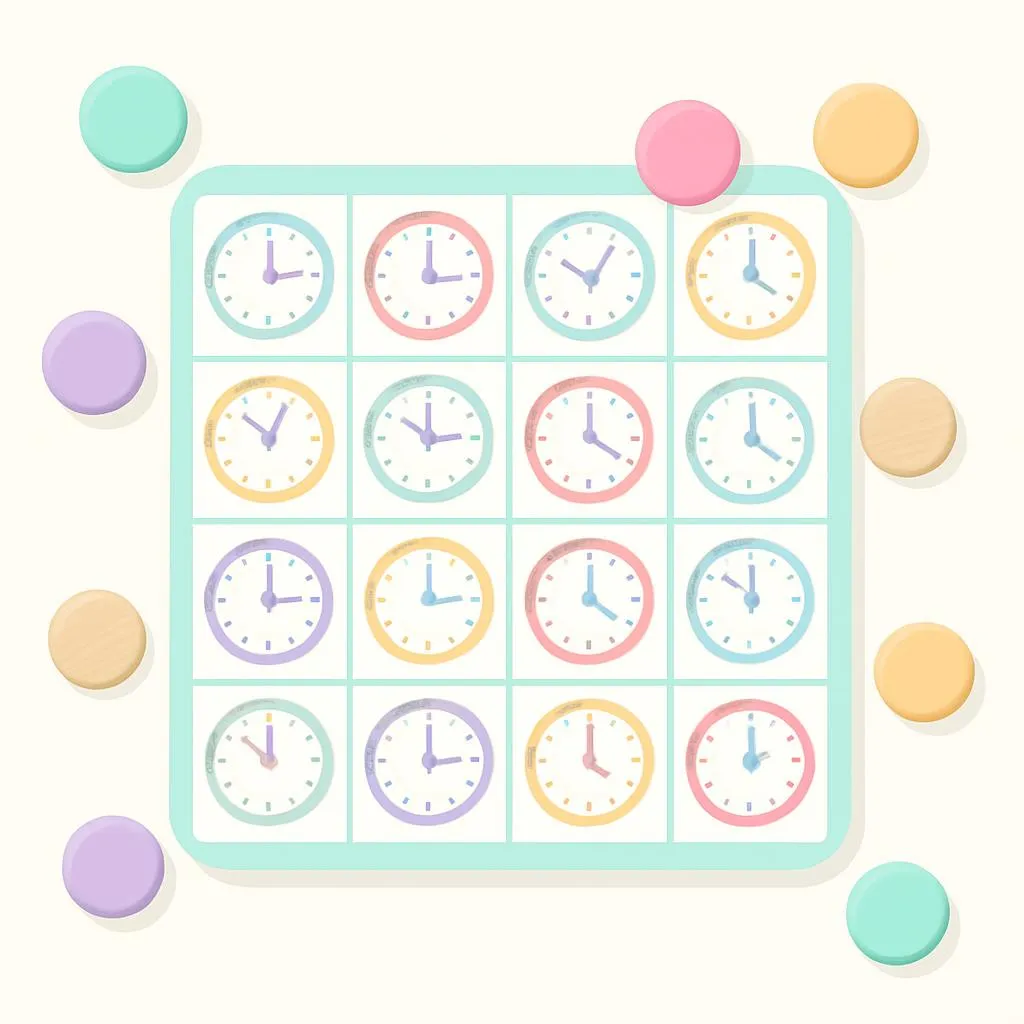
Game 2: Time Bingo
What You Need:
- Bingo cards with clock faces showing different times
- Calling cards with times written in words or numbers
- Markers or chips
How to Play:
Create bingo cards with 9-16 different clock faces. Call out times randomly (e.g., "half past two" or "2:30"). Students mark the corresponding clock on their card. First to get a line or full card wins!
Variations:
- Picture Bingo: Instead of calling times, describe daily activities ("lunch time," "bedtime")
- Digital-Analog Match: Call digital times, students mark analog clocks
- Blackout Bingo: Must fill entire card to win
Educational Benefits:
Reinforces time recognition, listening skills, and provides repeated practice in a fun format.
Game 3: What's the Time, Mr. Wolf?
What You Need:
- Large demonstration clock
- Open space for movement
How to Play:
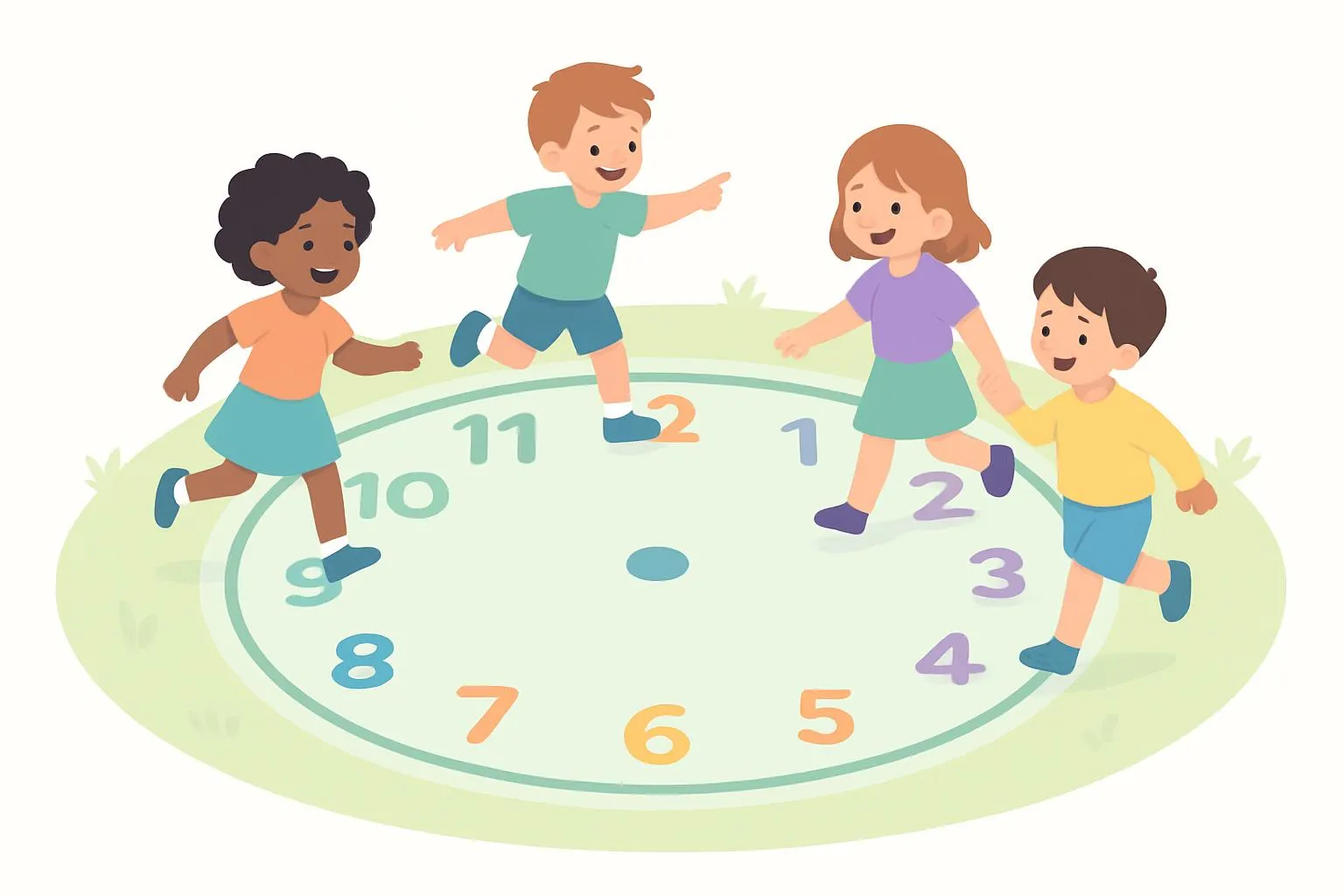
One student is "Mr. Wolf" and stands at one end of the room with a large clock. Other students line up at the opposite end. Students call out "What's the time, Mr. Wolf?" Mr. Wolf sets the clock to a time and shows it. Students must read the time correctly and take that many steps forward (e.g., 3:00 = 3 steps). When Mr. Wolf shows "dinner time," students run back to the start before being tagged.
Variations:
- Minute Steps: Use the minutes shown (e.g., 3:15 = 15 steps)
- Freeze Time: When tagged, student must correctly read a time to be freed
- Team Version: Teams take turns being Mr. Wolf
Educational Benefits:
Combines physical activity with learning, perfect for kinesthetic learners. Builds time recognition and number sense.
Game 4: Time Memory Match
What You Need:
- Pairs of cards: one with analog clock, one with matching digital time
- Or: pairs of cards with same time shown in different ways
How to Play:
Lay all cards face down in a grid. Players take turns flipping two cards, trying to find matching pairs (analog clock matching its digital equivalent). Keep matched pairs. Player with most pairs wins.
Variations:
- Word Match: Match clock faces with written times ("three thirty")
- Activity Match: Match times with daily activities
- Elapsed Time: Match start and end times that are 1 hour apart
Educational Benefits:
Strengthens memory, pattern recognition, and conversion between analog and digital formats.
Game 5: Clock Scavenger Hunt
What You Need:
- Clock cards hidden around classroom or home
- Recording sheet
- Pencils
How to Play:
Hide cards with different clock faces around the room. Students search for cards and record the times they find. First to find all clocks and record times correctly wins. Can also hide clues that lead to the next clock location.
Variations:
- Time Order Hunt: Find clocks and arrange them in chronological order
- Math Hunt: Find two clocks and calculate elapsed time between them
- QR Code Hunt: Scan codes to reveal clock puzzles
Educational Benefits:
Encourages active learning, problem-solving, and independent practice.
Game 6: Time Charades
What You Need:
- Cards with times and associated activities
- Timer
How to Play:
Students draw a card showing a time and activity (e.g., "7:00 AM - wake up"). They act out the activity without speaking while others guess both the activity and the time. Award points for correct guesses.
Variations:
- Time Only: Act out what the clock hands would look like
- Daily Routine: Focus on typical daily activities and their times
- Team Charades: Teams compete for points
Educational Benefits:
Connects time to real-world contexts, develops communication skills, and makes abstract concepts concrete.
Game 7: Build-a-Clock Relay
What You Need:
- Clock face templates (one per team)
- Numbers 1-12 (separate pieces)
- Hour and minute hands (separate pieces)
- Time cards
How to Play:
Divide class into teams. Place clock pieces at one end of room, teams at the other. Call out a time. First team member runs to collect the clock face, second gets the numbers and arranges them, third and fourth get the hands and set the correct time. First team to build the clock correctly wins.
Variations:
- Speed Round: Multiple rounds with different times
- Blindfold Challenge: One team member guides blindfolded teammate
- Puzzle Clock: Clock face is a jigsaw puzzle to assemble first
Educational Benefits:
Promotes teamwork, physical activity, and hands-on clock construction understanding.
Game 8: Time Dominoes
What You Need:
- Domino-style cards with clock faces on one end and digital times on the other
- Must create a set where times can match end-to-end
How to Play:
Like traditional dominoes, but matching times instead of dots. A clock showing 3:00 can connect to a digital "3:00" on another domino. Players take turns placing matching dominoes. First to use all dominoes wins.
Variations:
- Elapsed Time Dominoes: Match times that are 30 minutes apart
- Word Dominoes: Match written times to clock faces
- Team Dominoes: Teams work together to create longest chain
Educational Benefits:
Develops matching skills, strategic thinking, and format conversion abilities.
Game 9: Clock Twister
What You Need:
- Large mat with clock faces drawn in circles
- Spinner with times or body parts + times
- Markers for different colors
How to Play:
Create a Twister-style mat with multiple clock faces. Spinner says "Right hand on 3:30" or "Left foot on quarter past 2." Students must find the correct clock and place the correct body part on it. Last player standing wins!
Variations:
- Math Twister: Spinner gives math problems (e.g., "2:00 plus 30 minutes")
- Team Twister: Teams work together to reach all clocks
- Speed Twister: Timed rounds with point scoring
Educational Benefits:
Combines physical activity with time recognition, perfect for kinesthetic learners and brain breaks.
Game 10: Time Detective
What You Need:
- Story cards with time-related mysteries
- Clock manipulatives
- Detective notebooks
How to Play:
Present time-based mysteries: "The library opens at 9:00 AM. Sarah arrived when the clock showed 9:30. How late was she?" Students use clocks to solve mysteries and record answers. Award "detective badges" for correct solutions.
Variations:
- Elapsed Time Mysteries: "The movie started at 2:15 and ended at 4:00. How long was it?"
- Schedule Mysteries: Solve problems using daily schedules
- Team Investigation: Groups work together on complex cases
Educational Benefits:
Develops critical thinking, elapsed time calculation, and real-world problem-solving skills.
Tips for Successful Game Implementation
Preparation Tips:
- Start Simple: Begin with easier times (whole hours) before advancing
- Clear Instructions: Demonstrate games before students play independently
- Differentiation: Prepare easier and harder versions for different skill levels
- Materials Ready: Have all game pieces prepared and organized in advance
During Gameplay:
- Monitor Understanding: Circulate and check for correct time reading
- Encourage Peer Teaching: Let students help each other
- Celebrate Effort: Praise attempts, not just correct answers
- Keep It Moving: Maintain pace to sustain engagement
After Games:
- Debrief: Discuss what times were challenging
- Connect to Learning: Link game experiences to formal lessons
- Practice Worksheets: Follow up with targeted practice using our worksheet generator
- Student Reflection: Have students share favorite games and why
Creating Your Own Time Games
Once you've tried these games, consider creating your own variations:
- Adapt Familiar Games: Turn any board game into a time game by adding clock challenges
- Student Input: Ask students to design their own time games
- Theme Integration: Connect games to current classroom themes or holidays
- Technology Integration: Use tablets or interactive whiteboards for digital versions
Balancing Games and Traditional Practice
While games are powerful learning tools, they work best when combined with traditional practice:
- Monday-Tuesday: Introduce new concept with direct instruction
- Wednesday: Practice with worksheets from our generator
- Thursday: Reinforce with games
- Friday: Assessment and game-based review
Assessment Through Games
Games aren't just for practice—they're excellent assessment tools:
- Observation: Note which students struggle during gameplay
- Recording: Have students record answers during games for later review
- Self-Assessment: Students track their own progress through game scores
- Peer Assessment: Partners check each other's work during games
Games for Different Settings
Classroom Games (20-30 students):
Time Bingo, Clock Race, What's the Time Mr. Wolf, Build-a-Clock Relay
Small Group Games (4-6 students):
Time Memory Match, Time Dominoes, Time Detective, Clock Scavenger Hunt
Partner Games (2 students):
Time Charades, Memory Match, Dominoes
Home Games (1-2 children):
Clock Scavenger Hunt, Time Detective, Memory Match, individual Clock Race
Conclusion: Play Your Way to Time-Telling Success
Games transform time-telling from a challenging concept into an exciting adventure. By incorporating these 10 games into your teaching routine, you'll see increased engagement, better retention, and more confident time-tellers.
Remember: the best learning happens when children are having fun. These games provide the repetition needed for mastery while keeping motivation high.
Your Action Plan:
- Choose 2-3 games that fit your teaching style and student needs
- Gather or create necessary materials
- Introduce one new game per week
- Observe which games resonate most with your students
- Rotate games regularly to maintain interest
- Supplement with worksheets from our free generator
Recommended Reading
- Fun Clock Reading Activities for Kids
- Interactive Clock Practice: Online Time-Telling Games
- Daily Time Practice Routines That Actually Work
- 📖 Complete Teaching Guide: How to Teach Children to Tell Time
Ready to make time-telling fun? Start with Clock Race today and watch your students' enthusiasm for learning time soar!