The Power of Daily Practice in Time-Telling Mastery
Consistency is the key to mastering time-telling. Daily practice routines build automaticity, reinforce concepts, and develop confidence. This guide provides practical, easy-to-implement daily routines that naturally integrate time-telling practice throughout the school day without adding extra burden to your schedule.
Why Daily Practice Works
- Builds Automaticity: Regular practice makes time-reading automatic
- Prevents Forgetting: Daily reinforcement maintains learned skills
- Increases Confidence: Repeated success builds student confidence
- Creates Habits: Time awareness becomes natural and habitual
- Provides Context: Real-world application makes learning meaningful
Morning Routines (5-10 minutes)
1. Morning Time Check-In
When: As students arrive or during morning meeting
How It Works:
- Display current time on demonstration clock
- Ask: "What time is it right now?"
- Students read time individually or chorally
- Connect to schedule: "School starts at 8:00, it's now 8:15, so we're 15 minutes into our day"
Variations:
- Have student of the day set and read the clock
- Compare analog classroom clock to digital device
- Practice with student clocks at desks
2. Schedule Preview
When: During morning meeting
How It Works:
- Review daily schedule with times
- Point to each activity and its time
- Students read times aloud
- Discuss: "How long until recess?" or "What time is lunch?"
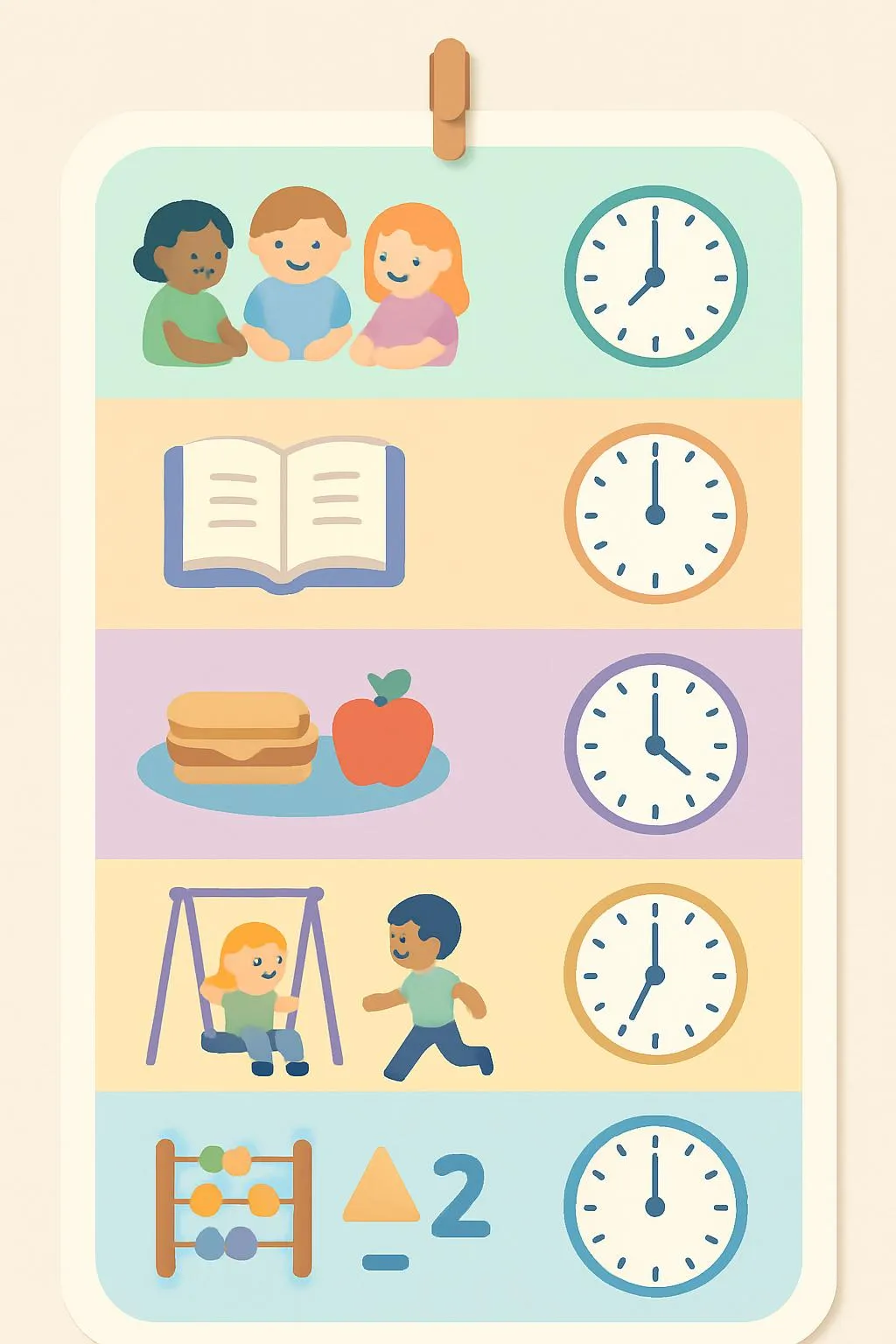
Visual Support: Create picture schedule with clock faces showing each activity time
3. Time-Setting Challenge
When: First 5 minutes of class
How It Works:
- Call out a time
- Students set their individual clocks
- Check for accuracy
- Repeat with 3-5 different times
Progression: Start with whole hours, advance to minutes as students improve
Throughout-the-Day Routines
4. Transition Time Announcements
When: Before every transition
How It Works:
- "It's 10:15. Time for recess!"
- "Look at the clock. It's 12:00. What do we do at 12:00?" (Lunch)
- Students read the time before transitioning
- Connect time to activity consistently
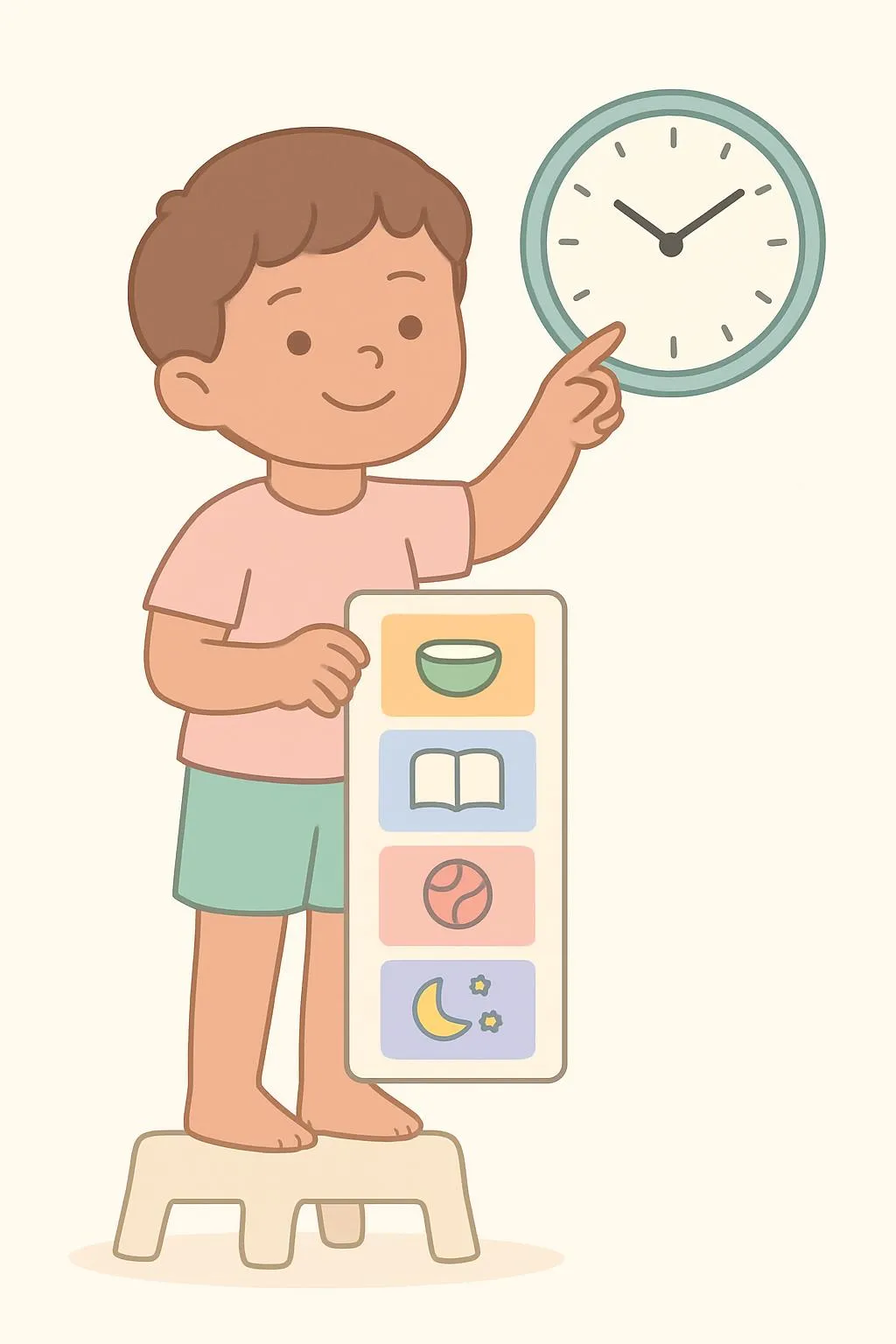
Key Phrase: Always state the time before announcing the activity
5. Hourly Time Checks
When: On the hour (or every 30 minutes)
How It Works:
- Set timer to chime on the hour
- When it chimes, everyone stops and reads the clock
- Quick chorus: "It's ___ o'clock!"
- Resume activities
Time Required: 30 seconds, multiple times daily
6. Time Prediction Game
When: Before activities with set durations
How It Works:
- "It's 2:00 now. Our activity will take 30 minutes. What time will it be when we finish?"
- Students predict end time
- Check clock when activity ends
- Discuss: "Were we close? Why or why not?"
Skills Developed: Elapsed time, estimation, time sense
7. Clock Monitor Role
When: Throughout the day
How It Works:
- Assign "Clock Monitor" as daily classroom job
- Student announces time at designated intervals
- Reminds class of upcoming transitions
- Rotates daily so all students participate
Responsibilities:
- Announce time every 30 minutes
- Give 5-minute warnings before transitions
- Help teacher track schedule
Afternoon Routines
8. Post-Lunch Time Practice
When: After lunch, during settling time
How It Works:
- Quick 5-minute worksheet from our generator
- Time-telling game or activity
- Partner practice with student clocks
- Helps students refocus after lunch
9. Afternoon Schedule Check
When: After lunch
How It Works:
- Review afternoon schedule
- Students read each activity time
- Calculate time until dismissal
- Plan remaining day together
10. End-of-Day Reflection
When: Last 5 minutes of school day
How It Works:
- "What time is it now?"
- "What time did school start?"
- "How long have we been at school today?"
- Review key times from the day
Weekly Routines
11. Monday Time Assessment
Purpose: Check retention from weekend
Activity:
- Quick 10-question time-reading quiz
- Use results to plan week's focus
- Identify students needing extra support
12. Friday Time Games
Purpose: Fun practice to end the week
Activities:
- Time Bingo
- Clock Race
- What's the Time, Mr. Wolf?
- Time-themed board games
Integration with Subject Areas
Math Class Integration
Daily Math Warm-Up:
- Include 2-3 time problems in daily warm-up
- Mix time-telling with other math skills
- Progress from simple to complex throughout year
Word Problems:
- Incorporate time into story problems
- "The movie starts at 2:30 and lasts 90 minutes..."
- Real-world application builds relevance
Reading/Language Arts Integration
Time-Related Vocabulary:
- Include time words in spelling lists
- Read books about time and clocks
- Write about daily schedules and routines
Sequencing Activities:
- Order events by time
- Create timelines of stories
- Write schedules for characters
Science Integration
Time Measurement:
- Time experiments and observations
- Track growth over time
- Discuss day/night cycles with time
Social Studies Integration
Historical Timelines:
- Create timelines with specific times
- Discuss daily life in different eras
- Compare schedules across cultures
Home-School Connection Routines
13. Daily Home Practice
Recommended Routine:
- 5-10 minutes of time practice at home
- Parent asks time at regular intervals
- Child sets alarm clocks for activities
- Practice with our printable worksheets
Parent Communication:
"Please help your child practice telling time at home! Ask 'What time is it?' throughout the day. Have them help set timers and alarms. Just 5 minutes of daily practice makes a huge difference!"
14. Weekend Time Journal
Activity:
- Students record times of weekend activities
- Draw clock faces for each activity
- Share on Monday morning
- Connects school learning to home life
Seasonal and Special Event Routines
15. Birthday Time Tradition
Activity:
- Birthday student announces their birth time
- Class sets clocks to that time
- Discuss AM/PM, time of day
- Makes time personal and memorable
16. Holiday Countdown
Activity:
- Calculate time until special events
- Count days, hours, minutes
- Update daily
- Builds excitement and time sense
Differentiated Practice Routines
For Struggling Learners:
Extra Support Routine:
- 5-minute small group practice daily
- Focus on current skill level only
- Use manipulatives and visual aids
- Celebrate small improvements
For Advanced Learners:
Challenge Routine:
- More complex time problems
- Elapsed time calculations
- Time zones and international time
- Leadership roles (Clock Monitor, peer tutor)
Technology-Enhanced Routines
17. Digital Time Practice
Options:
- 5 minutes with time-telling apps
- Interactive whiteboard activities
- Online games during computer time
- Tablet practice stations
18. Video Time Breaks
Activity:
- Short time-telling videos (2-3 minutes)
- Songs about telling time
- Animated clock demonstrations
- Use as brain breaks or transitions
Assessment Routines
19. Weekly Progress Checks
Friday Assessment:
- 5-minute quick check
- 10 times to read
- Track progress over time
- Adjust instruction based on results
20. Self-Assessment Routine
Student Reflection:
- Students rate confidence: "I can read whole hours" ⭐⭐⭐⭐⭐
- Identify what they need to practice
- Set personal goals
- Track own improvement
Creating Your Custom Routine
Step 1: Assess Your Schedule
- Identify natural practice opportunities
- Look for transition times
- Find 5-10 minute blocks
- Consider daily rhythm
Step 2: Start Small
- Choose 2-3 routines to implement
- Master these before adding more
- Make them consistent and predictable
- Build gradually over time
Step 3: Be Consistent
- Same routines at same times daily
- Students learn to expect practice
- Becomes automatic part of day
- Consistency = results
Step 4: Track Progress
- Note which routines work best
- Adjust based on student response
- Celebrate improvements
- Modify as needed
Troubleshooting Common Challenges
Challenge: "We don't have time for daily practice"
Solution: Integrate into existing routines rather than adding separate time. Use transitions, morning meetings, and subject integration.
Challenge: "Students resist practice"
Solution: Make it fun! Use games, competitions, technology, and variety. Keep sessions short (5 minutes).
Challenge: "Some students aren't improving"
Solution: Provide differentiated small group practice. Check for prerequisite skill gaps. Consider learning differences.
Conclusion: Consistency Creates Mastery
Daily practice routines are the secret to time-telling success. By integrating brief, consistent practice throughout the school day, you build automaticity without overwhelming students or your schedule.
Key Takeaways:
- Daily practice is more effective than occasional long sessions
- Integration into existing routines saves time
- Consistency and repetition build automaticity
- Real-world application increases relevance
- Short, frequent practice sessions work best
Your Action Plan:
- Choose 2-3 routines from this guide
- Implement consistently for 2 weeks
- Assess effectiveness and student response
- Add additional routines gradually
- Use our worksheet generator for daily practice materials
- Track student progress weekly
Recommended Reading
- Connecting Time to Daily Activities: Real-World Learning
- 10 Fun Clock Games for Kids
- How to Use Clock Worksheets Effectively
- 📖 Complete Teaching Guide: How to Teach Children to Tell Time
Ready to implement daily time practice? Generate fresh worksheets for each day with our free generator and watch your students' skills soar!